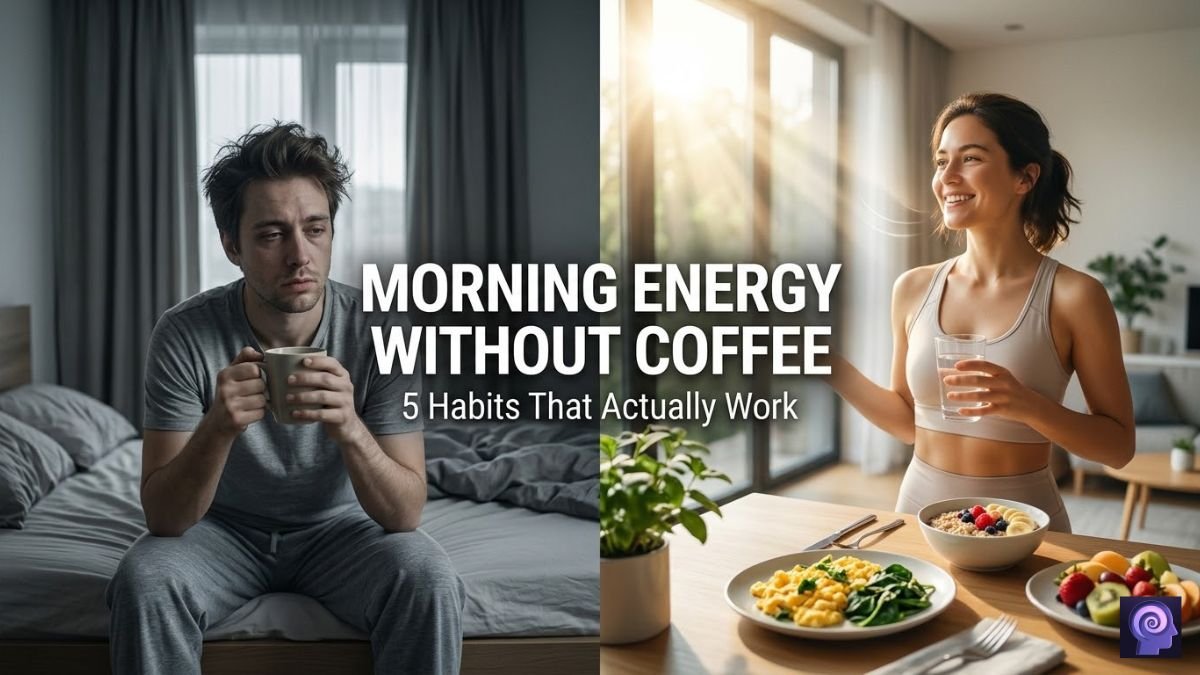
You wake up. Your eyes barely open. The first thought in your head is coffee. Sound familiar? You are not alone. Millions of people start their day completely dependent on caffeine to feel human. But here is the truth — coffee does not create energy. It borrows it. That temporary boost you feel is often followed by a crash, mood dip, and the urge to reach for another cup. The cycle never really ends.
What if you could wake up feeling alert, focused, and genuinely energized — without a single drop of coffee? It is possible, and it does not require a complicated routine or expensive supplements. These 5 morning habits that improve your energy without coffee are simple, backed by science, and easy enough to start tomorrow morning. Give them a week. Your body will thank you.
Also Read



5 Morning Habits That Improve Your Energy Without Coffee
Before jumping in, here is something important to understand. Your body has its own natural energy system. It is driven by hormones, hydration, light, movement, and oxygen. When you work with that system instead of overriding it with caffeine, your energy becomes steadier, longer-lasting, and more balanced throughout the entire day.
Here are the five habits that make the biggest difference.
Habit 1: Drink Water the Moment You Wake Up
This is the simplest and most overlooked morning habit there is. While you sleep, your body goes 7 to 8 hours without water. You breathe, you sweat lightly, and your organs keep working — all while using up the fluids in your body. By the time your alarm goes off, you are already mildly dehydrated, and that dehydration shows up as fatigue, brain fog, and low mood.
Drinking 16 to 20 ounces of water right after waking helps your body flush out toxins, rehydrate your cells, and send oxygen and nutrients to your brain more efficiently. The result is a noticeable boost in alertness — often within 20 to 30 minutes.
How to Make It a Habit
Keep a water bottle or glass on your nightstand before you go to sleep each night. That way, the moment you open your eyes, the water is right there. You do not have to think about it. Just drink. Add a squeeze of lemon if you want a little extra flavor and a gentle boost to digestion.
Image Description: A clear glass of water with lemon slices resting on a wooden nightstand beside a bed, soft morning light coming through sheer curtains, and a small potted plant in the background — representing a calm, healthy morning wake-up routine.
Habit 2: Get Natural Sunlight Within 30 Minutes of Waking
Your body runs on an internal clock called the circadian rhythm. This clock controls when you feel awake and when you feel sleepy. Sunlight is the most powerful signal that resets this clock every single morning. When natural light enters your eyes, your brain stops producing melatonin — the hormone that makes you feel drowsy — and starts increasing serotonin and cortisol in a healthy, natural way.
The result is that you feel genuinely awake, not just caffeinated. Research consistently shows that morning sunlight exposure improves alertness, stabilizes mood, and even makes it easier to fall asleep at night. It is one of the most powerful free tools for energy that most people completely ignore.
What to Do
Step outside for just 10 to 15 minutes within the first 30 to 60 minutes of waking. You do not need to stare at the sun. Just being outside in daylight — even on a cloudy day — sends the right signal to your brain. If you cannot go outside, open your blinds fully and sit near a bright window.
Image Description: A person standing barefoot on a small balcony in the early morning, eyes closed and face gently lifted toward the sky, wearing casual morning clothes, with soft golden sunlight and a blurred green background — representing peaceful morning sunlight exposure.
Habit 3: Do 5 to 10 Minutes of Light Movement
You do not need to run a marathon or do a full gym workout to get an energy boost from exercise. Even just 5 to 10 minutes of light movement in the morning is enough to dramatically change how you feel.
When you move your body, your heart rate rises, blood circulation increases, and your muscles signal to your brain that it is time to be alert. Exercise also triggers the release of endorphins and a chemical called norepinephrine — both of which improve mood, sharpen focus, and raise energy levels. This is a natural stimulant effect that lasts far longer than a cup of coffee, and it comes without any crash.
Easy Movement Ideas for Mornings
You do not need equipment or a gym membership. Here are simple options that work:
- 10 jumping jacks followed by 10 squats
- A 5-minute walk around the block
- Light stretching focused on the spine, neck, and shoulders
- A short yoga flow with deep breathing
- Dancing to one of your favorite songs in the kitchen
The goal is not intensity. The goal is to get your blood moving and shake off the stillness of sleep.
Image Description: A young woman doing a simple standing stretch in a bright living room with large windows, morning light casting warm shadows across a wooden floor, wearing comfortable activewear, smiling with eyes closed — representing easy and enjoyable morning movement.
Habit 4: Try Deep Breathing or Box Breathing
Most people breathe just enough to get by. But intentional, conscious breathing is one of the fastest ways to flood your brain and body with oxygen, reduce morning cortisol spikes, and step into the day feeling calm and clear — not anxious and scattered.
One of the most effective techniques is box breathing. It is simple, takes less than 5 minutes, and has been used by athletes, military personnel, and wellness experts to sharpen focus and control energy.
How to Do Box Breathing
Here are the four steps:
- Inhale slowly through your nose for 4 seconds
- Hold your breath for 4 seconds
- Exhale slowly through your mouth for 4 seconds
- Hold again for 4 seconds
Repeat this cycle 4 to 6 times. That is it. In under 5 minutes, your nervous system calms down, your oxygen flow increases, and your mental clarity improves noticeably. If box breathing feels too rigid at first, just try taking 5 long, slow, deep breaths after waking up. Even that small act makes a measurable difference.
Another popular option is the 4-7-8 technique: inhale for 4 seconds, hold for 7, exhale for 8. This version is especially good for people who feel anxious in the mornings.
Image Description: A close-up of a person sitting cross-legged on a yoga mat near an open window, hands resting gently on their knees, eyes softly closed, with a calm and focused expression — representing intentional morning breathing practice in a peaceful home setting.
Habit 5: Eat a Protein-Rich Breakfast Instead of Skipping It
Skipping breakfast seems harmless, but it is one of the biggest reasons people feel sluggish and mentally foggy by mid-morning. Your brain runs on glucose, and after a full night of sleep, your blood sugar is already on the lower side. Without a proper breakfast, it stays low — and low blood sugar equals low energy, poor concentration, and irritability.
But not just any breakfast will do. A sugary cereal, a muffin, or a glass of juice might feel energizing at first, but these foods cause a rapid blood sugar spike followed by a sharp crash. The result is you feel worse by 10 AM than if you had eaten nothing at all.
What to Eat for Lasting Morning Energy
The key is a breakfast that combines protein, healthy fat, and complex carbohydrates. This combination keeps blood sugar stable, supports brain function, and gives you slow-burning fuel that lasts for hours. Good options include:
- Eggs with whole grain toast and half an avocado
- Greek yogurt (unsweetened) with berries and a handful of nuts
- Oatmeal with a scoop of nut butter and banana slices
- A smoothie with spinach, banana, protein powder, and almond milk
Starting your day with a nutrient-rich meal that includes protein and healthy fat is one of the most reliable ways to maintain steady energy and focus from morning until midday — no coffee required.
Image Description: A top-down flat lay of a balanced breakfast spread on a clean white table — a bowl of oatmeal topped with fresh berries and almond slices, a boiled egg, a glass of water with lemon, and a small pot of green tea — representing a wholesome, energizing morning meal.
Why These Habits Work Better Than Coffee in the Long Run
Coffee is not inherently bad. For many people, one or two cups a day is perfectly fine. The problem is relying on caffeine as your primary source of energy. When caffeine is your only energy strategy, your body gradually needs more of it to get the same effect. You build tolerance, your natural energy systems get weaker, and you end up more dependent on caffeine than you were before.
These five habits work differently. They support and strengthen your body’s own energy production systems. Hydration fuels your cells. Sunlight resets your hormones. Movement stimulates blood flow and natural chemicals. Deep breathing oxygenates your brain. A proper breakfast fuels your metabolism. Together, they create a foundation of natural, lasting energy that does not crash, does not require a refill, and gets stronger over time.
A Simple Morning Routine Using All 5 Habits
Here is how all five habits can fit into just 25 to 30 minutes each morning:
- Minutes 0–2 — Drink a full glass of water right after waking
- Minutes 2–7 — Do 5 minutes of light stretching or movement
- Minutes 7–12 — Step outside for morning sunlight while doing 5 minutes of deep breathing
- Minutes 12–30 — Prepare and eat a protein-rich breakfast
That is it. No alarm snoozing. No reaching for your phone. No waiting for coffee to brew. Just 30 minutes of simple habits that set your entire day up for energy, clarity, and focus.
Final Thoughts
The idea that you need coffee to function in the morning is one of the most common and most limiting beliefs people hold about their own bodies. You do not. Your body is fully capable of generating real, clean, lasting energy on its own — it just needs the right inputs.
Start with one habit this week. Maybe it is just drinking water before anything else. Then add sunlight. Then movement. Build slowly, and within two weeks, most people notice a significant shift in how they feel each morning. The energy is there. You just have to stop borrowing it from caffeine and start creating it yourself.
Word count: ~1,180 words




 Important Notice -The content on this website is provided for general informational and educational purposes only. It is not a substitute for professional medical advice, diagnosis, or treatment. Always consult a qualified healthcare provider before making any health-related decisions.