Most people know they should drink more water. But knowing and doing are two very different things. You sit at your desk, get lost in work or daily tasks, and before you know it — hours have passed and you haven’t had a single sip. Sound familiar? That kind of irregular hydration is quietly draining your energy, focus, and overall health without you even realizing it.
The good news is that there is one simple fix that health experts and nutritionists keep coming back to: drinking water every 30 minutes. It sounds almost too easy. But once you understand what this habit does to your body and brain, you’ll want to start today. This article will walk you through everything — from how much water adults actually need, to smart tricks that make staying hydrated effortless.
Also Read



Why Drinking Water Every 30 Minutes Is a Game-Changer
Your body is made up of roughly 60% water. Every single cell, organ, and tissue in your body depends on water to function properly. The problem is, your body is constantly losing water — through breathing, sweating, urination, and even digestion. If you don’t replace it regularly, even mild dehydration starts to cause real problems.
Here is what happens when you wait too long between sips:
- Your concentration drops
- You feel tired even without doing much
- Your mood gets worse — you feel irritable or foggy
- Headaches start to creep in
- Your digestion slows down
Drinking water in small, regular amounts throughout the day — every 30 minutes or so — keeps your hydration levels steady. Instead of flooding your system all at once or forgetting for hours, this rhythm gives your body a constant and gentle supply of what it needs most.
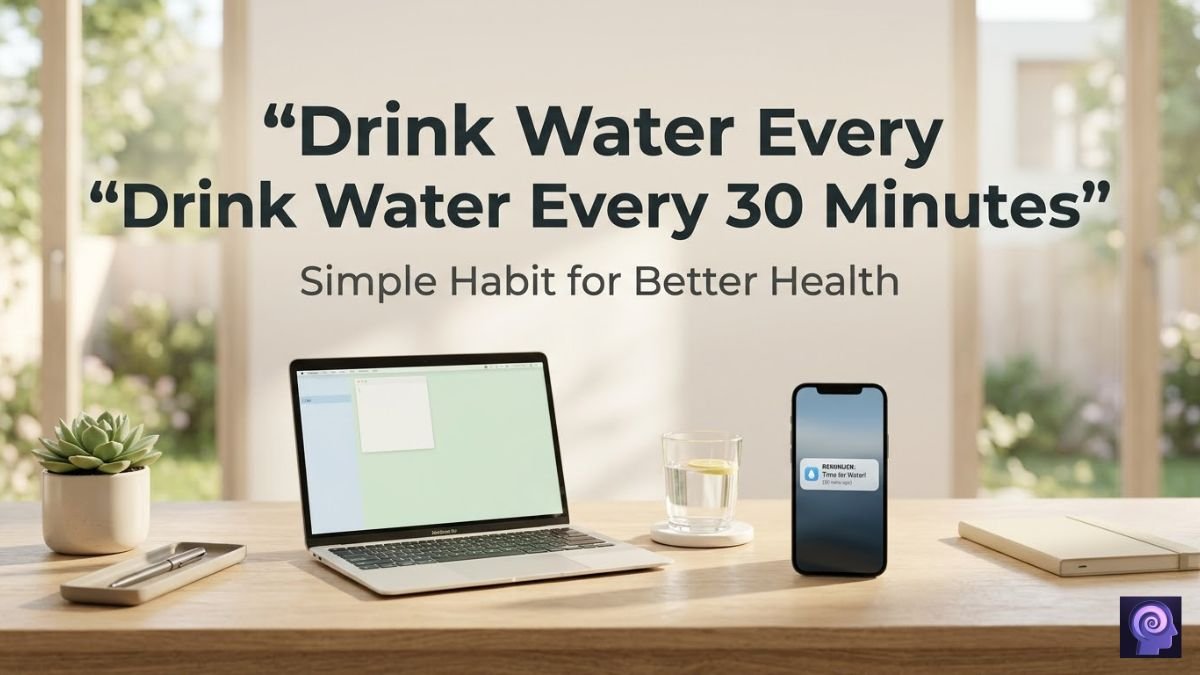
Image Description: A clear glass of fresh water on a clean white desk beside a laptop, with soft natural light coming through a window, and a small digital timer set to 30 minutes next to the glass — representing a productive and hydrated work routine.
How Much Water Do Adults Actually Need?
This is one of the most common questions — and the honest answer is: it depends on the person.
The General Guidelines
According to the National Academy of Medicine, the recommended daily fluid intake is roughly 13 cups (about 3 liters) for men and around 9 cups (about 2.2 liters) for women. This includes water from all sources — drinks and food combined.
A useful formula many health experts recommend is simple: take your body weight in pounds and divide it by two. The result is roughly how many ounces of water you should aim for daily. So if you weigh 160 pounds, your goal would be around 80 ounces of water per day — that is about 10 cups.
Factors That Change Your Needs
Your water needs are not fixed. They shift depending on several things:
Activity level — If you exercise, your body needs more. Experts suggest adding around 8 ounces of water for every 30 minutes of physical activity.
Climate — Hot or humid weather makes you sweat more, so you need to drink more to compensate.
Health conditions — Fever, diarrhea, vomiting, or certain medications all increase your fluid needs.
Age — Older adults have a weaker thirst signal, which means they may not feel thirsty even when they are dehydrated. This makes regular timed drinking especially important for seniors.
Image Description: A simple infographic-style illustration showing a human silhouette with arrows pointing to factors that affect hydration — weather, exercise, age, and diet — with water glasses representing daily goals for men and women, on a light blue background.
What Happens to Your Body When You Stay Hydrated All Day
The benefits of consistent hydration go far beyond just “not being thirsty.” Here is what proper hydration actually does for you every day.
Better Brain Function and Focus
Your brain is nearly three-quarters fluid. When you are even slightly dehydrated, your ability to concentrate, think clearly, and remember things takes a hit. Research has shown that drinking just a small amount of water can boost short-term attention significantly. Staying hydrated helps your brain send and receive signals faster, which means sharper thinking and less brain fog throughout the day.
Steady Energy Levels
Fatigue is one of the earliest signs of dehydration. When your body runs low on water, it cannot transport oxygen and nutrients to your cells as efficiently. The result is that heavy, sluggish feeling that many people try to fix with coffee or energy drinks. Water is a more reliable and lasting source of energy — without the crash that follows caffeine.
Better Mood
Mild dehydration is linked to increased irritability, stress, and low mood. Staying hydrated helps your body maintain hormonal balance and supports the release of feel-good brain chemicals. If you find yourself feeling grumpy or anxious mid-afternoon, try drinking a glass of water before reaching for anything else.
Weight Management
Drinking water 30 minutes before a meal is one of the most effective and effortless weight management tricks. It fills your stomach partially, which naturally reduces how much you eat. Studies have found that people who drank water before meals consistently lost more weight over time compared to those who did not. Water also supports metabolism and your body’s ability to burn fat for energy.
Kidney Health and Toxin Removal
Your kidneys process a large amount of blood every day, filtering out waste and pushing it out through urine. They need adequate water to do this job well. Regular hydration reduces the risk of kidney stones and urinary tract infections — two very common and uncomfortable conditions that are often linked to not drinking enough.
Image Description: A side-by-side comparison illustration of a hydrated person sitting upright and energetic at a desk versus a dehydrated person slumped over with a tired expression — both in a clean, modern office setting, with clear labels showing the differences.
How to Know If You Are Drinking Enough
You do not need a fancy gadget to check your hydration. Your body already gives you clear signals.
The most reliable method is urine color. If your urine is light yellow or close to clear, you are well hydrated. If it is dark yellow or amber, you need to drink more water right away. Other signs that you are not getting enough include dry mouth, dizziness, headache, muscle cramps, and feeling unusually tired.
Simple Tricks to Drink More Water Every Day
Knowing you should drink water and actually remembering to do it are two different challenges. Here are practical and proven ways to make it easier.
Set a Timer or Use a Reminder App
The most direct method is to set a repeating timer on your phone every 30 to 60 minutes. There are also free apps designed specifically for hydration reminders that track your daily intake and send gentle nudges throughout the day.
Keep Water Visible and Within Reach
If your water bottle is in another room or out of sight, you will forget about it. Place a filled water bottle or glass right on your desk, kitchen counter, or beside your bed. The moment you see it, you will drink.
Start Your Morning With Water
Before coffee, before your phone, before anything — drink a full glass of water when you wake up. Your body has gone without fluids for 7 to 8 hours through the night, and rehydrating first thing gives your metabolism and brain a strong start.
Infuse Your Water for Flavor
If plain water feels boring, add a few slices of lemon, cucumber, mint leaves, or berries. This adds natural flavor without any sugar or calories, and many people find flavored water much easier to sip throughout the day.
Eat Hydrating Foods
Not all of your daily water needs to come from a glass. Fruits and vegetables like watermelon, cucumber, oranges, strawberries, and lettuce are packed with water. Adding more of these to your meals helps your body stay hydrated between drinks.
Pair Water With Daily Habits
Attach water drinking to things you already do. Drink a glass every time you sit down to eat, every time you take a bathroom break, or every time you switch tasks at work. Linking hydration to existing habits removes the need to rely on memory alone.
Image Description: A realistic flat-lay photo of a reusable water bottle, a slice of lemon, fresh mint leaves, sliced cucumber, and a smartphone with a hydration reminder app open — arranged neatly on a white marble surface, representing everyday hydration tips.
A Realistic Daily Water Schedule to Follow
Here is a simple schedule you can adapt to your own routine:
- Morning (7:00 AM) — One large glass of water right after waking up
- Mid-morning (9:30 AM) — One glass while working or before a snack
- Before lunch (12:00 PM) — One glass about 30 minutes before eating
- Afternoon (2:30 PM) — One glass to fight the mid-afternoon slump
- Late afternoon (4:30 PM) — One glass before or after a break
- Before dinner (6:30 PM) — One glass 30 minutes before your meal
- Evening (8:30 PM) — One small glass to close out the day
This adds up to about 7 to 8 glasses of water spread evenly through the day — which covers most adults’ daily needs when combined with water from food.
Final Thoughts
Drinking water every 30 minutes is not a complicated health trend or a strict medical protocol. It is simply a smarter way to give your body something it needs all day long. The habit supports your energy, your focus, your digestion, your kidneys, and even your mood — all without any cost or effort beyond remembering to sip.
Start small. Set one reminder. Keep one bottle visible. Drink one extra glass tomorrow morning. Build from there. Your body will notice the difference faster than you expect.




 Important Notice -The content on this website is provided for general informational and educational purposes only. It is not a substitute for professional medical advice, diagnosis, or treatment. Always consult a qualified healthcare provider before making any health-related decisions.