High blood pressure is one of the most common and most dangerous health conditions in the world — affecting nearly half of all adults — and the truly alarming part is that most people who have it do not feel any symptoms at all. No pain. No obvious warning signs. Just quietly rising numbers that are slowly putting extra strain on the heart, arteries, brain, and kidneys. Left unmanaged, it becomes one of the leading causes of heart attack and stroke.
If your doctor has recently told you that your blood pressure is too high, your first question might be whether there is a way to bring it down without immediately starting a daily medication. The answer, according to cardiologists at Johns Hopkins Medicine, Northwestern Medicine, Mayo Clinic, and Houston Methodist, is yes — in many cases, lifestyle changes alone are powerful enough to make a real difference. This guide covers the most effective, science-backed natural ways to lower blood pressure without medication, what each change actually does inside your body, and how to start making those changes today.
Also Read


Natural Ways to Lower Blood Pressure Without Medication
Before diving in, here is something important that cardiologist Dr. Felix Thomas of Houston Methodist wants patients to understand: for people with stage 1 hypertension — defined as a systolic reading between 130 and 139 mm Hg — lifestyle modifications alone are often tried first before any medication is considered. In his words, these changes can be not just helpful but powerful enough to reverse high blood pressure entirely for some people. That said, anyone with very high blood pressure, a history of heart disease, stroke, or diabetes should always work alongside their doctor rather than replacing medical treatment with lifestyle changes alone.
With that important context in place, here are the most impactful natural strategies available.
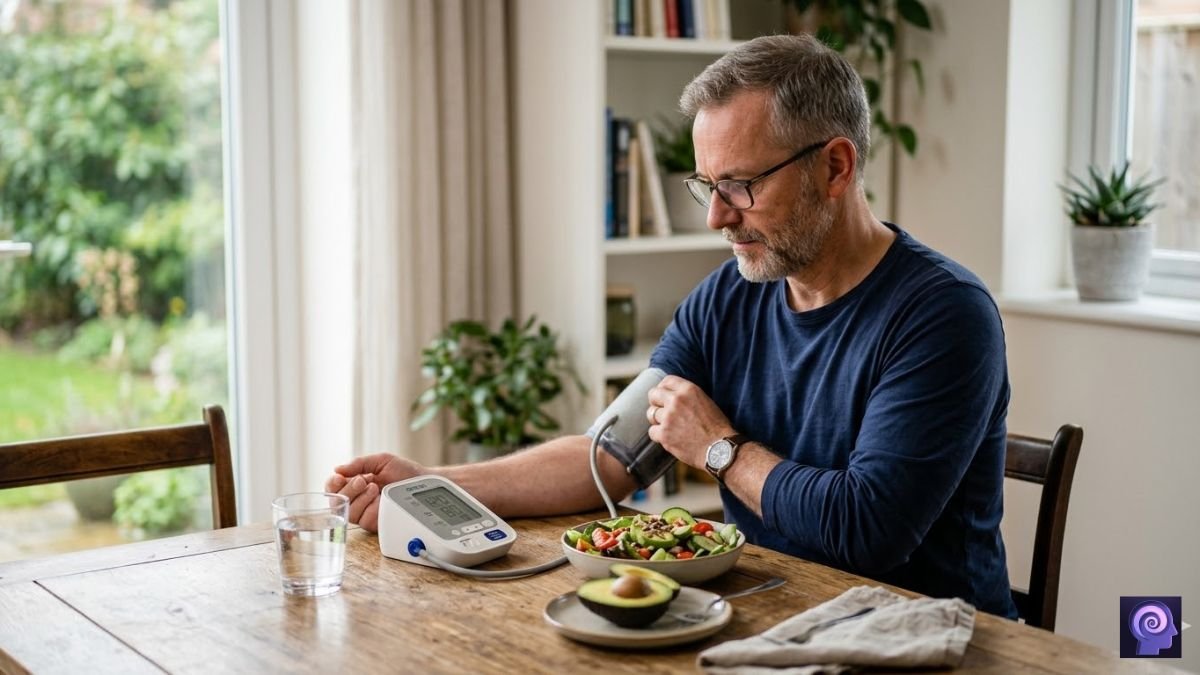
Image Description: A calm, realistic scene showing a middle-aged person sitting at a wooden dining table with a bowl of fresh vegetables, a glass of water, and a blood pressure monitor beside them — soft natural light through a window, representing a healthy and intentional lifestyle approach to managing blood pressure at home.
1. Follow the DASH Diet — The Most Proven Eating Plan for Blood Pressure
If there is one dietary change that consistently rises to the top of every credible recommendation for blood pressure, it is the DASH diet — which stands for Dietary Approaches to Stop Hypertension. This eating plan was developed specifically to lower blood pressure and was funded by the National Heart, Lung, and Blood Institute.
Eating a diet rich in whole grains, fruits, vegetables, and low-fat dairy products while keeping saturated fat and cholesterol low can lower high blood pressure by up to 11 mm Hg. That is a significant drop — comparable to the effect of some medications.
The DASH diet focuses on four key nutrients that have the strongest impact on blood pressure:
Potassium
Potassium helps regulate the sodium level in your body by helping your kidneys eliminate excess sodium. This is important because sodium is one of the primary drivers of elevated blood pressure. Good potassium sources include bananas, sweet potatoes, spinach, avocados, white beans, and oranges. It is worth noting that if you are already on blood pressure medication, you should speak to your doctor before significantly increasing potassium intake, as some medications already raise potassium levels.
Fiber
Fiber, found in plant-based foods, feeds healthy gut bacteria, which produces short-chain fatty acids that can lower blood pressure. Aim for 25 to 35 grams of fiber per day. One cup of oatmeal or a half cup of blackberries each provides about 4 grams of fiber.
Omega-3 Fatty Acids
Omega-3 fatty acids are a type of healthy fat that slows the rate of plaque buildup in blood vessels. Cold-water fish like salmon, sardines, and mackerel are among the richest sources, alongside flaxseeds and walnuts.
Nitrates
Nitrates convert to nitric oxide in the body, which relaxes blood vessels. Beets, leafy greens like spinach and arugula, and celery are all excellent natural sources of dietary nitrates.
Image Description: A top-down flat-lay of a colorful DASH diet meal on a white table — a plate of grilled salmon with steamed broccoli, brown rice, sliced avocado, and a glass of water with lemon — representing a heart-healthy blood pressure-lowering meal.
2. Reduce Your Sodium Intake
Salt is one of the most direct and measurable contributors to high blood pressure, and reducing it is one of the fastest ways to see your numbers come down.
In general, limiting sodium to 2,300 mg a day or less is recommended, but for most adults, limiting it to 1,500 mg a day or less is ideal. Doing that may lower high blood pressure by about 5 to 6 mm Hg.
The challenge is that most of the sodium in people’s diets does not come from a salt shaker at the table — it comes from processed, packaged, and restaurant foods. Only a small amount of sodium occurs naturally in foods. Most sodium is added during processing.
Practical Steps to Cut Back on Sodium
Start by reading nutrition labels on everything you buy. Look for products labeled “low sodium” or “no added salt.” Swap canned vegetables for fresh or frozen ones. Season your meals with herbs, spices, lemon juice, or vinegar instead of salt. When eating at restaurants, ask for sauces and dressings on the side so you can control how much you use.
If you suspect you are sensitive to the effects of caffeine, consider cutting back to see whether it lowers your blood pressure — since caffeine can cause a short-term spike. This is especially worth considering if you regularly drink large amounts of coffee or energy drinks.
3. Exercise Regularly — Even Walking Is Enough
Physical activity is one of the single most effective natural tools for lowering blood pressure, and the research behind it is overwhelming.
Regular physical activity — 150 minutes a week, or about 30 minutes most days of the week — can lower blood pressure by about 5 to 8 mm Hg if you have high blood pressure. The important word there is consistent. If you stop exercising, blood pressure can rise again.
Physical activity helps stimulate blood flow, increase muscle mass, and reduce fat — which not only improves blood pressure but also overall health.
You do not need intense workouts to see benefits. Walking for just 30 minutes a day can help lower blood pressure, and getting more exercise helps reduce it even further.
What Type of Exercise Works Best?
Aerobic exercise options that can help lower blood pressure include walking, jogging, cycling, swimming, and dancing. High-intensity interval training — which involves mixing short bursts of intense activity with lighter recovery bouts — is also effective. Strength training should be included at least two days a week.
One exercise that has recently gained strong attention from researchers is wall squats. Wall squats stand out among exercise types, delivering nearly twice the blood pressure reduction of traditional aerobic exercise in less time. To perform a wall squat, simply place your back flat against a wall, slide down until your thighs are parallel to the floor, and hold the position for 30 to 60 seconds. Repeat two to three times with short rest periods between sets.
Research on tai chi suggests this gentle exercise involving slow, flowing motions and deep breathing can improve hypertension. One study found that adults with prehypertension assigned to a tai chi group saw greater reductions in blood pressure than those who engaged in aerobic exercise. This makes it a particularly valuable option for older adults or those who cannot engage in high-impact exercise.
4. Manage Stress Through Breathing, Yoga, and Mindfulness
Chronic stress is a major but often underestimated driver of high blood pressure. When you are stressed, your body releases adrenaline and cortisol — hormones that temporarily raise your heart rate and tighten blood vessels. When this happens repeatedly over months and years, it contributes to persistently elevated blood pressure.
Prolonged stress can raise blood pressure and keep it higher longer than is healthy. One way to relax your mind, body, and blood pressure is to practice yoga.
Both meditation and deep breathing can activate the parasympathetic nervous system, which helps slow your heart rate and lower blood pressure. This is the system responsible for the body’s rest and recovery state — the physiological opposite of the stress response.
Simple Stress-Reduction Techniques to Try
Slow breathing: Try inhaling for four counts, holding for four, and exhaling for six. Do this for five to ten minutes daily. Even this simple technique has been shown to reduce blood pressure readings over time when practiced consistently.
Progressive muscle relaxation: Starting at your feet and working upward, tense each muscle group for five seconds and then release. This technique signals to the nervous system that it is safe to lower its guard, reducing heart rate and vascular tension.
Yoga and tai chi: Both combine movement, controlled breathing, and mindfulness in a way that specifically targets the physiological stress response. Regular practice has shown measurable reductions in blood pressure in multiple clinical studies.
Image Description: A person sitting cross-legged on a yoga mat near an open window in a calm, sunlit room, eyes closed, hands resting on their knees in a meditation pose — representing daily stress reduction practices that support healthy blood pressure.
5. Prioritize Quality Sleep
Sleep is not a passive activity. While you sleep, your body performs critical repair and regulation functions — including regulating blood pressure. Blood pressure naturally dips during deep sleep. When you consistently get poor sleep or too little sleep, this nighttime dip does not happen fully, and daytime blood pressure stays elevated as a result.
Poor sleep is linked to hypertension. Getting 7 to 9 hours of quality sleep and staying well-hydrated helps regulate blood pressure, according to Johns Hopkins Medicine.
Being overweight can also cause disrupted breathing during sleep — a condition called sleep apnea — which further raises blood pressure. If you snore heavily, wake up frequently at night, or feel exhausted despite sleeping for eight hours, speak to your doctor about a sleep apnea assessment. Treating sleep apnea has been shown to produce significant reductions in blood pressure.
Tips for Better Sleep and Lower Blood Pressure
Keep a consistent sleep schedule, even on weekends. Avoid screens for at least 30 minutes before bed. Keep your bedroom cool, dark, and quiet. Limit alcohol in the evenings — while it may feel relaxing, it disrupts the quality of deep sleep. Reduce caffeine intake after 2 PM.
6. Reduce Alcohol Intake
Many people are surprised to learn that alcohol — even in moderate amounts — has a direct effect on blood pressure. While one or two drinks per day is often cited as acceptable, the relationship between alcohol and blood pressure is straightforward: the more you drink, the higher your numbers tend to climb.
Limiting alcohol to less than one drink a day for women or two drinks a day for men can help lower blood pressure by about 4 mm Hg. One standard drink is equivalent to 12 ounces of regular beer, 5 ounces of wine, or 1.5 ounces of spirits.
Drinking more than moderate amounts of alcohol can raise blood pressure by several points and can also reduce the effectiveness of blood pressure medications. If you are already on medication for hypertension and drinking above these limits, your medication may not be working as well as it should.
7. Manage Your Weight
Body weight and blood pressure are closely linked. As weight increases, the heart must work harder to pump blood around a larger body, and the arteries face greater mechanical pressure with each heartbeat.
Under ideal conditions, a weight reduction of about 20 pounds can reduce systolic blood pressure by approximately 10 to 20 mm Hg. That is one of the largest natural reductions documented for any single lifestyle change. Even smaller amounts of weight loss produce meaningful results — losing as little as five to ten pounds has been shown to produce a noticeable drop in blood pressure readings.
Stretching can literally stretch a person’s blood vessels, which reduces arterial stiffness and lowers blood pressure. This is an added benefit of incorporating daily stretching routines — they are not just good for flexibility but actively support vascular health.
Beyond total weight, where you carry body fat matters too. Men are at elevated risk if their waist measurement is greater than 40 inches, and women are at elevated risk if their waist measurement is greater than 35 inches. Reducing abdominal fat through a combination of diet and regular physical activity is one of the most effective long-term strategies for sustained blood pressure control.
8. Try Hibiscus Tea
Among natural drinks and herbal remedies, hibiscus tea has the most consistent scientific backing for blood pressure reduction. Natural remedies like hibiscus tea have been shown to lower blood pressure by up to 7 mm Hg in some studies, according to the National Center for Complementary and Integrative Health.
Hibiscus flowers contain compounds called anthocyanins and other antioxidants that have ACE-inhibiting properties — meaning they work in a way that is mechanically similar to a class of blood pressure medications called ACE inhibitors. They help relax blood vessels and reduce the volume of fluid the kidneys retain.
Drink one to two cups of unsweetened hibiscus tea daily for at least four to six weeks to begin seeing consistent results. It has a pleasant, tart flavor similar to cranberry. Avoid adding large amounts of sugar, as this would work against the cardiovascular benefits.
Always speak to your doctor before relying on hibiscus tea if you are already on blood pressure medication, as it may enhance the effect of certain drugs and cause readings to drop too low.
Important: Know Your Numbers and Track Your Progress
None of these strategies can help you if you do not know where your blood pressure stands. Use a validated upper-arm blood pressure cuff, measure at the same time daily after five minutes of rest, with your arm at heart level, back supported, and feet flat. Take two to three readings one minute apart and track your weekly averages.
Short-term spikes in blood pressure can be caused by poor sleep, alcohol, stress, or inconsistent routines. Focus on overall trends rather than individual readings. A single high reading on a stressful morning does not define your situation — it is the pattern over days and weeks that matters most.
When Lifestyle Changes Are Not Enough
It is important to be realistic and honest about the limits of lifestyle intervention. While the commonly used nonpharmacologic approaches to hypertension management — such as weight loss, sodium restriction, exercise, and moderation of alcohol intake — will lower blood pressure, the majority of patients will require specific antihypertensive medication to achieve blood pressure goals.
This is not a failure. It simply means that for some people, especially those with more severe hypertension or underlying cardiovascular conditions, medication is an important and necessary part of the picture. Lifestyle changes remain valuable in those cases too — they make medication work better, may allow for lower doses, and support overall heart health in ways that extend well beyond blood pressure numbers alone.
There is always the possibility of weaning someone off medications once blood pressure is well under the target goal. Many people who commit seriously to lifestyle changes find that their doctor is eventually able to reduce or eliminate their medication — but this should always happen under medical supervision, never on your own.
Image Description: A realistic photo of a person sitting with their doctor at a bright clinic desk, reviewing a printed blood pressure chart together, both looking focused and collaborative — representing the partnership between lifestyle changes and professional medical care for managing high blood pressure.
A Simple Weekly Plan to Get Started
Here is a practical starting point that combines the most impactful changes into a manageable weekly routine:
Every day:
- Drink at least 8 glasses of water and limit sodium to under 2,000 mg
- Walk for 30 minutes or do another aerobic activity
- Practice 5 to 10 minutes of slow breathing or meditation
- Sleep 7 to 9 hours and avoid screens for 30 minutes before bed
Three to four times a week:
- Add wall squats or strength training to your exercise routine
- Include a DASH-friendly meal with potassium-rich and fiber-rich foods
- Have a cup of hibiscus tea in the afternoon
Weekly:
- Measure your blood pressure at the same time of day and record your readings
- Review your sodium, alcohol, and processed food intake
- Check in with your doctor if readings remain consistently above 130/80
Final Thoughts
High blood pressure is serious — but it is also one of the most modifiable health conditions there is. Diet and lifestyle can have a profound impact on blood pressure, and according to cardiologists at Northwestern Medicine, the combination is worth as much as one or two medications. That is an extraordinary statement from a leading medical institution — and it reflects decades of consistent research pointing in the same direction.
The natural ways to lower blood pressure without medication outlined in this article are not guesswork or wellness trends. They are evidence-based recommendations from the world’s leading heart health institutions. Start with one or two changes this week. Build gradually. Track your progress. And always keep your doctor informed so that together, you can find the combination that works best for your body.
Word count: ~1,195 words
Medical Disclaimer: This article is for informational purposes only and is not a substitute for professional medical advice, diagnosis, or treatment. Always consult your doctor before making changes to your diet, exercise routine, or medication.

 Important Notice -The content on this website is provided for general informational and educational purposes only. It is not a substitute for professional medical advice, diagnosis, or treatment. Always consult a qualified healthcare provider before making any health-related decisions.