Think about this for a second. You finish dinner at 7 p.m., then don’t eat again until noon the next day. That’s it. No special foods, no counting every bite, just a longer gap between meals. That simple change is what millions of people now call intermittent fasting, and it’s still one of the most talked-about health habits going into 2026.
Some say it helped them drop weight without feeling like they’re on a diet. Others claim they have more energy, think clearer, and even sleep better. But is the excitement backed by solid evidence, or are we just chasing another wellness trend?
Also Read



Let’s look at what intermittent fasting really means, how most people actually do it, what the latest studies are showing, and whether it might make sense for you.
How Intermittent Fasting Works in Real Life
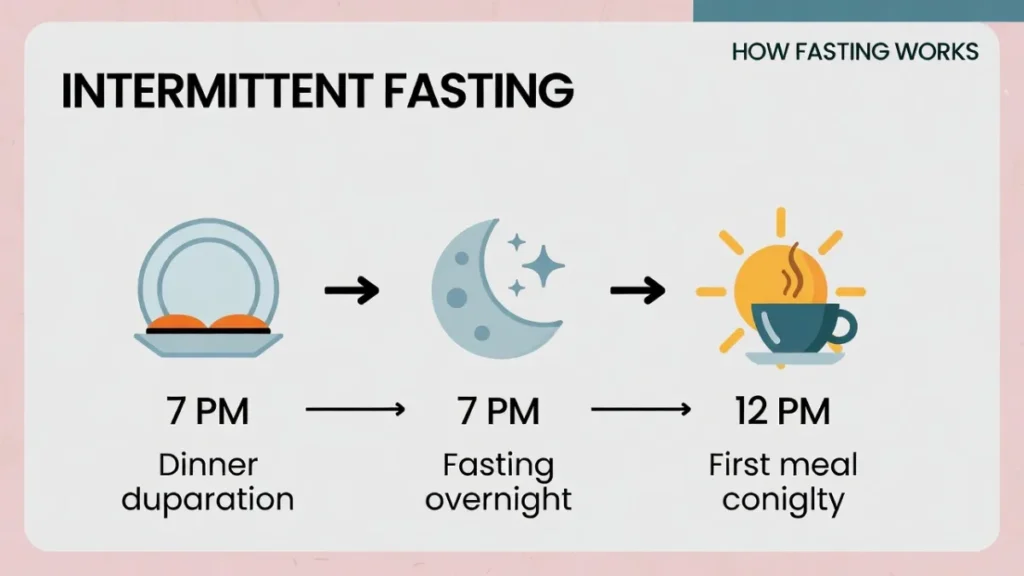
The whole concept is surprisingly basic. You pick certain hours or days when you eat, and the rest of the time you don’t. During the “off” periods you stick to water, plain tea, black coffee—anything with basically zero calories.
The most common version people follow right now is called 16:8. You eat everything you want within an eight-hour window (for example, from 12 noon until 8 p.m.) and fast the other sixteen hours. Many find this fairly easy because it mostly means skipping breakfast and not snacking after dinner.
Other popular ways include:
- Eating normally five days a week, then cutting way back to around 500–600 calories on two separate days (the 5:2 approach).
- Alternating between regular eating days and full fasting days.
- Doing one or two complete 24-hour fasts each week.
What draws people in is the simplicity. You don’t have to rethink your entire grocery list. You just move the timing of when you eat.
Why So Many People Say It Helps
The biggest reason people stick with it is weight loss. When your eating window is shorter, most people naturally eat less overall. No late-night bowl of cereal, no extra handfuls while watching TV. That small drop in calories adds up over weeks and months.
Beyond the scale, a lot of research has looked at other possible benefits. Several studies show improvements in blood sugar levels and how well the body responds to insulin—important for anyone worried about type 2 diabetes. Blood pressure, cholesterol numbers, and inflammation markers sometimes move in a good direction too, especially when people eat earlier in the day rather than pushing meals late into the evening.
There’s also growing interest in whether time-restricted eating might support brain health and slow some aging processes, though most of the strongest evidence so far still comes from animal research rather than long human trials.
Recent work from 2025 compared different fasting styles in people who already had obesity and type 2 diabetes. The ones who followed stricter calorie cuts on certain days often saw better improvements in blood sugar control and body composition than those who simply shrank their daily eating window without changing total calories.
Another interesting finding keeps popping up: finishing your last meal earlier in the day (think lunch as the biggest meal and a light early dinner) seems to give slightly better results for fat loss, glucose levels, and even blood pressure compared to eating the same amount of food but later at night.
The Parts That Don’t Always Match the Hype
Not every study tells the same story. A careful German trial published late in 2025 kept participants’ calorie intake exactly the same while forcing them into an eight-hour eating window. After several weeks they lost a little weight, but almost every other health marker—insulin sensitivity, blood lipids, blood pressure—barely budged.
That result suggests something important. The real driver behind most benefits might simply be eating fewer calories overall, not the timing itself. If you cram the same amount of food into a shorter window, the metabolic advantages often disappear or become very small.
Other practical points come up too. Some people feel hungry, tired, or short-tempered during the adjustment phase. Sticking to it long-term can be hard for anyone whose life doesn’t fit neatly into fixed eating hours—shift workers, parents with unpredictable schedules, athletes training at odd times.
Certain groups should be extra careful or avoid it completely: pregnant or breastfeeding women, anyone with a history of eating disorders, people on certain diabetes medications, or those prone to low blood sugar. For them, even mild fasting can create problems.
So Should You Give It a Try?
Intermittent fasting can be a useful tool, but it’s not magic. It tends to work about as well as classic calorie restriction for weight loss—and sometimes a tiny bit better—mainly because it helps some people eat less without constant mental effort.
The newest evidence leans toward these practical takeaways:
- Early eating patterns (breakfast and lunch as main meals, lighter or no late dinner) often edge out late eating windows.
- The biggest benefits usually show up when total calorie intake drops.
- Healthy, balanced meals still matter a lot more than the clock alone.
- It only makes sense if you can follow the pattern comfortably for months, not just a few weeks.
The bottom line is simple. If shrinking your eating window feels natural and leaves you feeling good, it can be worth experimenting with. If it makes you miserable, stressed, or overly focused on food, then it’s probably not the right approach for you.
The best eating style is always the one you can actually live with long-term. Intermittent fasting is just one option among many.
Have you played around with meal timing yourself? Did it click for you or feel like too much hassle? Drop your thoughts below—I’m genuinely curious how real people are experiencing it in 2026





 Important Notice -The content on this website is provided for general informational and educational purposes only. It is not a substitute for professional medical advice, diagnosis, or treatment. Always consult a qualified healthcare provider before making any health-related decisions.