
Imagine a medication primarily known for helping people with type 2 diabetes control blood sugar – or for dramatic weight loss in people with obesity – suddenly showing promise as a powerful shield against one of the deadliest cancers. That’s exactly what emerging research on GLP-1 receptor agonists (GLP-1 RAs, think drugs like semaglutide/Ozempic/Wegovy, liraglutide/Victoza/Saxenda) is suggesting in 2026.
A large, real-world study presented at the American Society of Clinical Oncology Gastrointestinal Cancers Symposium (January 2026) compared these popular GLP-1 drugs head-to-head with aspirin – the classic preventive option for colorectal cancer in certain high-risk groups. The results? People taking GLP-1 medications appeared to have a significantly lower risk of developing colorectal cancer than those on aspirin. And the benefit looked even stronger in people already at elevated risk.
Also Read



This isn’t just another small lab finding. It comes from a massive analysis of over 280,000 people, and it’s sparking serious discussion about whether these drugs could have a future role in cancer prevention – especially as colorectal cancer rates continue to rise in younger adults.
The Study: A Real-World Head-to-Head Comparison
Researchers used a large U.S. database (TriNetX) to identify patients prescribed either a GLP-1 RA or aspirin between 2000 and 2024. They matched 140,828 people in each group (total ~281,656 participants) using propensity-score matching to make the groups as comparable as possible (similar age, sex, comorbidities, etc.).
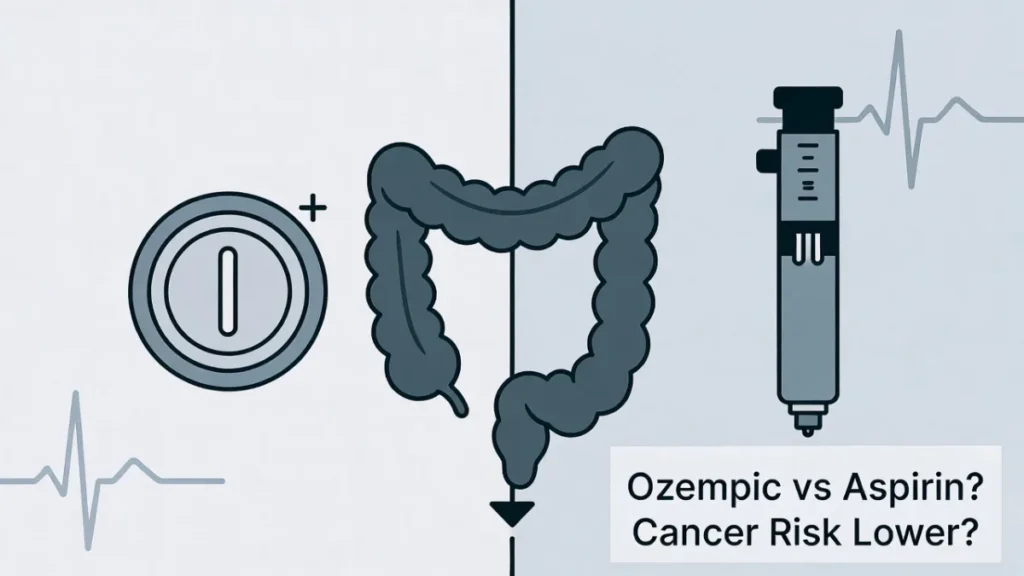
Key details from the analysis:
- Median follow-up: about 6–7 years (slightly longer for GLP-1 users)
- Colorectal cancer incidence:
- 0.130% in the GLP-1 group
- 0.176% in the aspirin group
- This translated to a 36% relative risk reduction with GLP-1 RAs compared to aspirin (hazard ratio/HR around 0.64, or risk ratio ~0.74 in some reports; numbers vary slightly across summaries but consistently show 26–36% lower risk)
- In high-risk subgroups (family history of CRC, genetic predisposition, inflammatory bowel disease like ulcerative colitis/Crohn’s, or first-degree relative with CRC): the reduction was even stronger, around 42% (HR ~0.58)
- The benefit held up across most subgroups: different ages (including under 45 and over 65), BMI levels (normal weight and obese), diabetes status, and even in people without atherosclerotic disease
- Among individual GLP-1 drugs, semaglutide (Ozempic/Wegovy) showed the clearest significant protective effect
The absolute risk reduction was small (about 0.045–0.05%), meaning you’d need to treat roughly 2,200 people to prevent one case – but at a population level, with millions using these drugs, that could translate to thousands of prevented cancers.
Why Might GLP-1 Drugs Protect Against Colorectal Cancer?
GLP-1 RAs mimic the gut hormone glucagon-like peptide-1. Beyond blood sugar control and appetite suppression, they have anti-inflammatory effects, reduce insulin resistance, slow gut motility, and influence cell growth pathways (like PI3K/AKT/mTOR, which is often overactive in cancers). Lab studies show they can suppress colorectal cancer cell proliferation and promote anti-tumor immune responses.
Aspirin has long been known to lower CRC risk (by about 20–30% in long-term users) through anti-inflammatory and anti-platelet effects – but it carries bleeding risks (GI bleeds, brain bleeds), which limits widespread use.
The new data suggest GLP-1s might offer comparable or better protection with a potentially more favorable safety profile for long-term prevention – though head-to-head bleeding/complication data wasn’t the main focus here.
Important Caveats – This Isn’t Proof Yet
This was a retrospective, observational study, not a randomized controlled trial. Even with careful matching, there could be unmeasured differences between the groups (people prescribed GLP-1s might have different lifestyles, follow-up care, or screening rates).
The population was enriched for higher-risk individuals (elevated CRC risk due to history or comorbidities), so results may not apply perfectly to average-risk people.
Follow-up was relatively short for cancer prevention (5–7 years), and colorectal cancer often develops over 10+ years.
Not all GLP-1 drugs showed equal benefit – semaglutide stood out, but more research is needed to confirm class effects.
Experts call this “promising” and “mind-blowing” preliminary evidence, but emphasize we need prospective, randomized trials to confirm causality and safety for cancer prevention.
What This Could Mean Moving Forward
If future studies confirm these findings, GLP-1 RAs could become a dual-purpose tool: managing diabetes/obesity while reducing CRC risk – especially appealing for overweight/obese patients, who already face higher cancer risk.
It might also shift guidelines on aspirin use for prevention, particularly in people who tolerate GLP-1s well.
For now, colorectal cancer prevention still relies on:
- Regular screening (colonoscopy starting at 45, earlier if high risk)
- Healthy lifestyle (diet, exercise, no smoking, limited alcohol)
- Aspirin in select high-risk cases (after doctor discussion)
But drugs like semaglutide are already used by millions – and this emerging data adds another intriguing layer to their benefits.
Have you been prescribed a GLP-1 drug (Ozempic, Wegovy, Mounjaro, etc.)? Or do you know someone who has? What are your thoughts on these medications potentially protecting against cancer? Drop your experiences or questions below – this field is moving fast, and real-world stories help ground the science.




 Important Notice -The content on this website is provided for general informational and educational purposes only. It is not a substitute for professional medical advice, diagnosis, or treatment. Always consult a qualified healthcare provider before making any health-related decisions.