
It’s heartbreaking every time it happens. A young, apparently healthy footballer collapses on the pitch during a match or training. The stadium falls silent. Medics rush in. Minutes later, the news breaks: sudden cardiac arrest. The player is gone. In the early 2000s, Germany saw two such tragedies in quick succession that shocked the nation and prompted the Deutsches Ärzteblatt to publish a sobering analysis: “Sudden Cardiac Death – Again Two Footballers Dead.”
The article, written in the wake of the deaths of young German players, highlighted a disturbing reality: sudden cardiac death (SCD) in athletes is rare, but when it occurs, it’s almost always due to an undetected heart condition. And despite years of awareness campaigns, screening programs, and better emergency response on sports fields, these tragedies continue to happen – not just in Germany, but worldwide.
Also Read


Let’s look at what the medical community knows today (as of 2026), why these deaths are so hard to prevent completely, and the steps that have actually saved lives since those early cases.
The Numbers: How Rare – And How Devastating – SCD Really Is
Sudden cardiac death in young competitive athletes (under 35) occurs in about 1 in 50,000 to 1 in 200,000 per year, depending on the country and sport. In football (soccer), the rate is slightly higher than in some other sports due to the intense physical demands and the large number of participants worldwide.
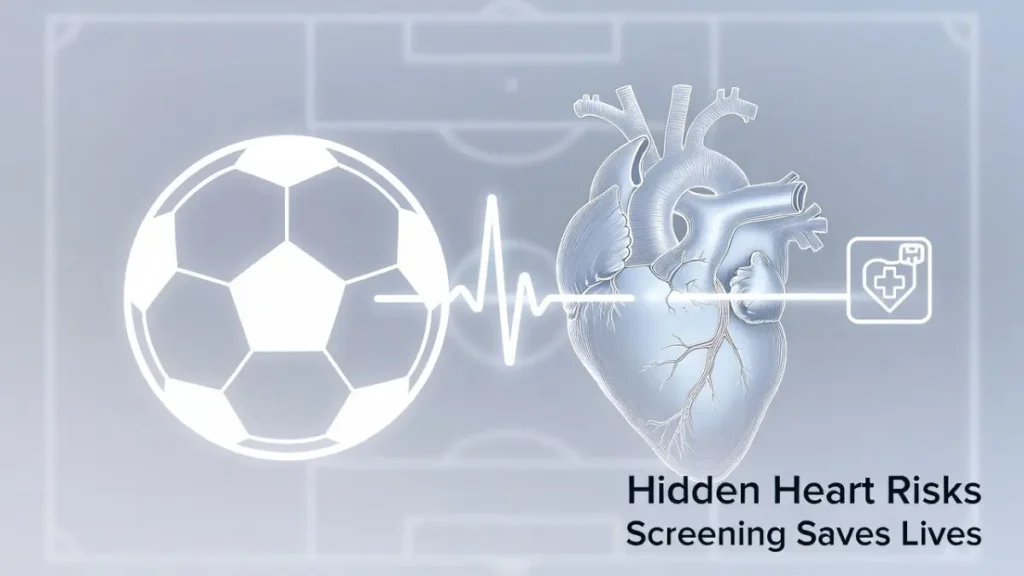
In most cases, the underlying cause is a hidden structural or electrical heart problem that only reveals itself under extreme stress. The most common culprits include:
- Hypertrophic cardiomyopathy (HCM) — Thickened heart muscle that obstructs blood flow or causes dangerous arrhythmias
- Arrhythmogenic right ventricular cardiomyopathy (ARVC) — Fatty/fibrous replacement of heart muscle leading to ventricular tachycardia
- Coronary artery anomalies — Malformed arteries that can get compressed during exercise
- Myocarditis — Inflammation of the heart muscle, often after a viral infection
- Channelopathies — Inherited electrical disorders like Long QT syndrome, Brugada syndrome, or catecholaminergic polymorphic ventricular tachycardia (CPVT)
- Aortic rupture or Marfan syndrome (less common)
In older athletes (>35), coronary artery disease (blocked arteries) becomes the dominant cause, but in young players, it’s almost always one of these inherited or congenital conditions.
The tragedy is that most of these athletes show no warning symptoms beforehand. They train hard, look fit, pass casual fitness checks – and then collapse without any prior sign.
Why Football Seems Particularly Vulnerable
Football involves repeated high-intensity bursts, sudden stops, changes in direction, and extreme emotional stress – all factors that can trigger arrhythmias in a vulnerable heart. Dehydration, electrolyte imbalances, or even a blunt chest impact (commotio cordis) can also play a role in rare cases.
The public nature of the collapses – in front of thousands of spectators and millions on TV – makes each incident feel more shocking and more frequent than the statistics suggest.
Lessons from the Early 2000s Cases – And Progress Since Then
The deaths discussed in the Ärzteblatt article prompted major changes in Germany and across Europe:
- Mandatory pre-participation screening Most professional clubs and many amateur federations now require ECGs, echocardiograms, and sometimes family history questionnaires for young players.
- Automated external defibrillators (AEDs) on every pitch UEFA and FIFA mandates require AEDs at all professional matches and training grounds, with trained personnel on site.
- Immediate CPR and defibrillation protocols Survival rates for witnessed cardiac arrest on the field have improved dramatically when bystanders act within minutes.
- Education and awareness Campaigns teach coaches, players, and fans the signs of cardiac distress and the importance of immediate action.
Despite these advances, screening is not foolproof. ECGs miss some conditions (especially channelopathies), and echocardiography can overlook subtle abnormalities. False positives can cause unnecessary anxiety or disqualifications. And in amateur/youth football, access to full screening is often limited.
Real Stories That Changed the Game
Marc-Vivien Foé (Cameroon international) collapsed and died during a 2003 Confederations Cup match – one of the cases that accelerated global AED mandates.
Antonio Puerta (Sevilla FC) died in 2007 after collapsing during a La Liga match, suffering multiple cardiac arrests over days.
In Germany, the deaths of young regional league players in the early 2000s fueled calls for nationwide screening standards.
More recently, Christian Eriksen’s collapse in 2021 during the Euros showed both the worst and the best: a sudden cardiac arrest in front of millions, followed by immediate CPR, defibrillation, and survival thanks to quick action.
What Can Players, Parents, and Coaches Do Today?
While we can’t eliminate risk entirely, these practical steps help:
- Insist on proper screening — At minimum, an annual history + physical exam + ECG for competitive youth players. Echocardiogram if anything is suspicious.
- Know the warning signs — Chest pain, unexplained fainting (especially during/after exercise), palpitations, extreme fatigue, or family history of sudden death under 50.
- AEDs and trained staff — Every club, school, or amateur team should have one and know how to use it.
- Don’t ignore symptoms — “It’s just a virus” or “he’s just tired” can be dangerous when it comes to the heart.
- Genetic testing — If there’s a family history of sudden death, inherited conditions, or known cardiomyopathies, specialist evaluation is essential.
Bottom Line – Progress, But No Guarantees
Sudden cardiac death in young footballers is still rare, but it’s never “normal.” The early 2000s cases that shocked Germany helped drive real changes: better screening, ubiquitous AEDs, faster emergency response, and more awareness.
Yet because many causes are silent and unpredictable, we haven’t eliminated the risk. The best protection remains a combination of thorough (but realistic) screening, immediate access to defibrillation, and a culture that treats every collapse as a cardiac emergency until proven otherwise.
Football is a beautiful game – and the goal now is to keep it that way without losing more of its brightest young talents.
Have you followed any of these cases closely? Or do you coach/train young players – how seriously does your club take heart screening and emergency preparedness? Real experiences from the field help everyone stay safer.




 Important Notice -The content on this website is provided for general informational and educational purposes only. It is not a substitute for professional medical advice, diagnosis, or treatment. Always consult a qualified healthcare provider before making any health-related decisions.