
Recurrent urinary tract infections (UTIs) are incredibly common, especially among women. The cycle of painful symptoms, doctor visits, and antibiotics can feel endless — and many people want to break it without relying on more pills. That’s why D-mannose, a natural sugar supplement you can buy over the counter, has become so popular. The promise is simple: take it daily, and it might stop bacteria from sticking to your bladder walls, flushing them out before they cause another infection.
It sounds promising and science-based. But a close look at the research — including a key German medical article from 2024 and more recent studies through 2025 — paints a much more cautious picture. Let’s walk through how D-mannose is supposed to work, what the studies actually found, why experts are skeptical, and what options have stronger support if you’re dealing with frequent UTIs.
Also Read



The Theory: How D-Mannose Is Thought to Prevent UTIs
D-mannose is a simple sugar closely related to glucose. Your body absorbs it quickly but excretes most of it unchanged into the urine.
Many common UTIs (especially those caused by E. coli) happen because bacteria use tiny projections (type 1 fimbriae or pili) to attach to the urinary tract lining. The idea is that D-mannose in the urine acts like a decoy: bacteria bind to the sugar molecules instead of the bladder wall, and then get washed away when you urinate.
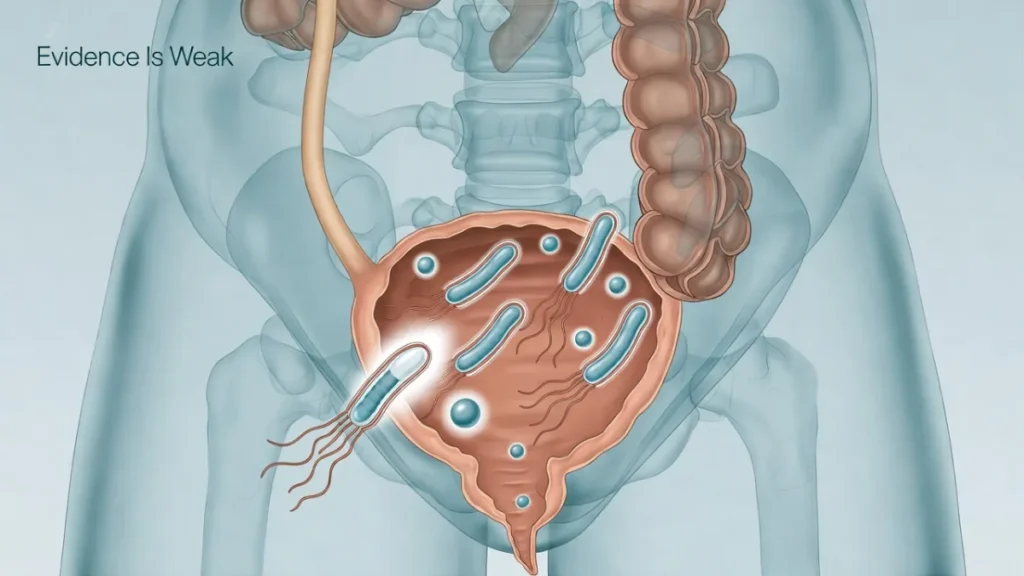
This mechanism makes sense biologically, and early smaller studies fueled a lot of excitement. D-mannose became a go-to recommendation in some circles as a non-antibiotic alternative for prevention.
What the Research Actually Shows — From Hopeful to Disappointing
An article in the Deutsches Ärzteblatt (German Medical Journal) from 2024 highlighted the debate. It noted that while older reviews (from 2020 and 2021) suggested D-mannose could help reduce recurrent UTIs, they criticized the small number of studies and their varying quality.
A 2022 Cochrane overview went further, pointing out a serious lack of high-quality randomized controlled trials (RCTs) and concluding there was little to no reliable evidence that D-mannose prevents UTIs.
The article spotlighted a large, well-designed RCT with 598 women who took 2 grams of D-mannose daily for six months. The results were clear: 51% of the D-mannose group had at least one recurrence compared to 55.7% in the placebo group. That roughly 5% difference was not statistically significant — in other words, it could easily have been due to chance.
This finding aligned with the emerging consensus. More recent meta-analyses (updated systematic reviews pooling multiple RCTs) from 2025 reinforce the same message:
- One 2025 meta-analysis of four RCTs (890 participants total) found no significant difference in recurrent UTI risk between D-mannose and placebo (relative risk 0.44, but with very high variability and p=0.082 — not statistically significant).
- Another 2025 meta-analysis of six RCTs (over 1,100 participants, mostly women) showed no reduction in recurrences compared to control groups or even antibiotics.
- Heterogeneity was high in these reviews, meaning studies varied in design, dose, and follow-up, making firm conclusions tricky — but the overall trend is clear: no convincing benefit.
Major guidelines have reflected this shift. The 2025 American Urological Association update advises that D-mannose alone “may not be effective” for prevention. European urology guidelines give it only a weak recommendation at best, calling the evidence contradictory and insufficient.
Even the draft S3 German guideline on uncomplicated UTIs (updated around 2024) mentions D-mannose as a possible alternative, but with caution and in light of the newer data, enthusiasm has cooled considerably.
Side Effects and Practical Considerations
The good news: D-mannose is generally very safe. Most people report no side effects, though some experience mild stomach upset or diarrhea. Typical preventive doses in studies were 1–2 grams per day.
However, if it doesn’t meaningfully reduce your infection rate, it’s essentially an expensive placebo for many users.
Better-Supported Ways to Reduce Recurrent UTIs
Since D-mannose isn’t delivering the reliable results many hoped for, experts recommend focusing on options with stronger evidence:
- Drink more water — Increasing daily fluid intake to 1.5–2 liters or more has been shown to cut recurrences significantly in multiple studies.
- Methenamine hippurate — This urinary antiseptic (non-antibiotic) has performed as well as low-dose antibiotics in trials and is a promising alternative.
- Vaginal estrogen — For postmenopausal women, topical estrogen restores healthy tissue and dramatically lowers risk (strong recommendation in most guidelines).
- Basic lifestyle habits — Urinate after sex, wipe front to back, avoid irritating products, and treat any underlying issues like incomplete bladder emptying.
- Other possibilities like certain immunostimulants (e.g., OM-89 bacterial lysates) show moderate evidence in some analyses.
If you’re postmenopausal or have other risk factors, a urologist can help tailor the best approach — often combining several strategies works far better than any single supplement.
The Bottom Line in January 2026
D-mannose has a logical mechanism and some early encouraging data, which is why it gained traction. But larger, higher-quality studies and recent meta-analyses tell a consistent story: it does not reliably prevent recurrent UTIs for most women. The difference from placebo is small or nonexistent, and the evidence remains weak and mixed.
If recurrent UTIs are a big problem for you, don’t rely on D-mannose as your main strategy. Talk to your doctor — they can help identify the best evidence-based plan for your situation, whether that’s lifestyle changes, other non-antibiotic options, or something else.
Have you tried D-mannose yourself? Did it seem to help, or were your results underwhelming? Sharing real experiences helps others navigate the mixed messages out there.





 Important Notice -The content on this website is provided for general informational and educational purposes only. It is not a substitute for professional medical advice, diagnosis, or treatment. Always consult a qualified healthcare provider before making any health-related decisions.