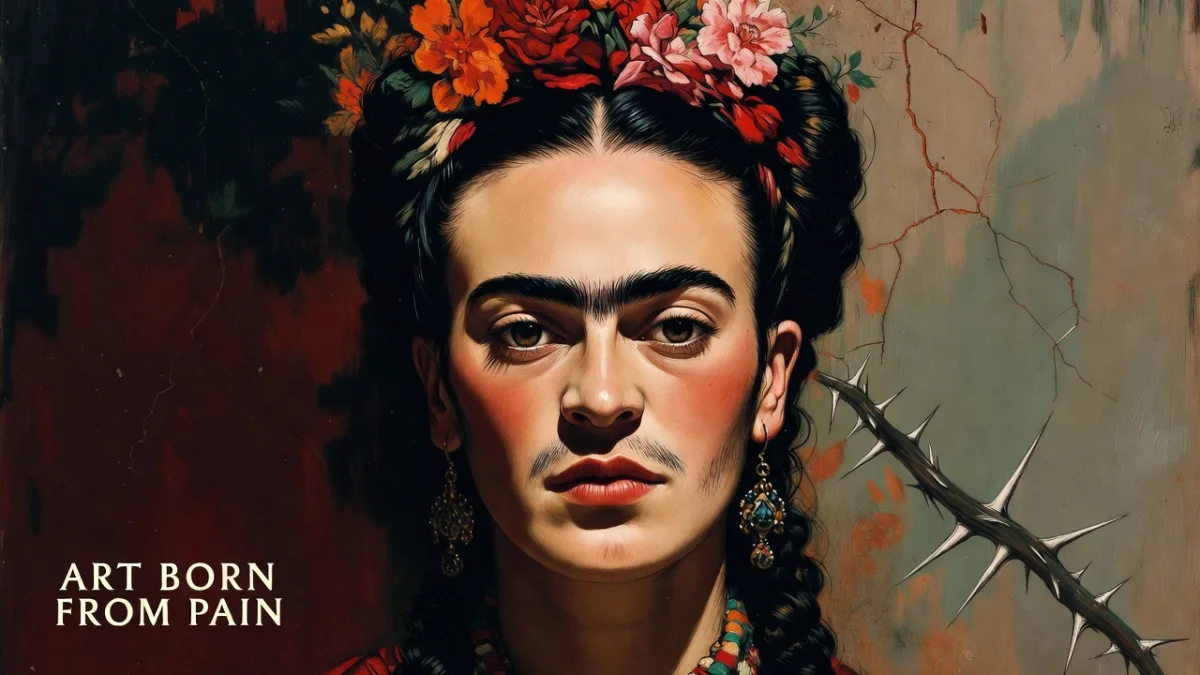
Imagine waking up every single day with pain that never really goes away. Sharp stabs in your back, legs that refuse to cooperate, surgeries that promise relief but often deliver more suffering. Now imagine taking all that raw agony and transforming it into paintings so powerful they still stop people in their tracks nearly 70 years after your death. That’s the extraordinary story of Frida Kahlo – the woman the German medical journal aptly calls the “Malerin der Schmerzen,” or Painter of Pain.
Frida didn’t just live with chronic illness; she made it the central subject of her work. Her small, intense self-portraits aren’t pretty decorations – they’re unflinching documents of a body and mind under constant siege. Yet somehow, through all the torment, her art radiates beauty, defiance, and a strange kind of poetry. In a world that often hides suffering, Frida put it front and center. And that’s exactly why her paintings still feel so urgent today.
Also Read



A Life Shaped by Trauma from the Very Start
Frida Kahlo was born in Mexico with dreams of becoming a doctor – ironic, considering how much time she would spend under medical care. Her health battles began early. As a young child, around age six, she likely contracted poliomyelitis, which left one leg thinner and weaker than the other.
The real turning point came at 18. A devastating bus accident shattered her body: multiple fractures in her spine, pelvis crushed, a metal handrail piercing her abdomen, and serious damage that affected her ability to have children. What followed was a grueling medical odyssey – more than 30 operations over the years, hospital stays in Mexico and the United States, orthopedic corsets, and eventually the amputation of her right leg. Chronic pain became her constant companion, along with depression, alcohol and drug use to cope, and the emotional weight of a turbulent marriage to the famous muralist Diego Rivera.
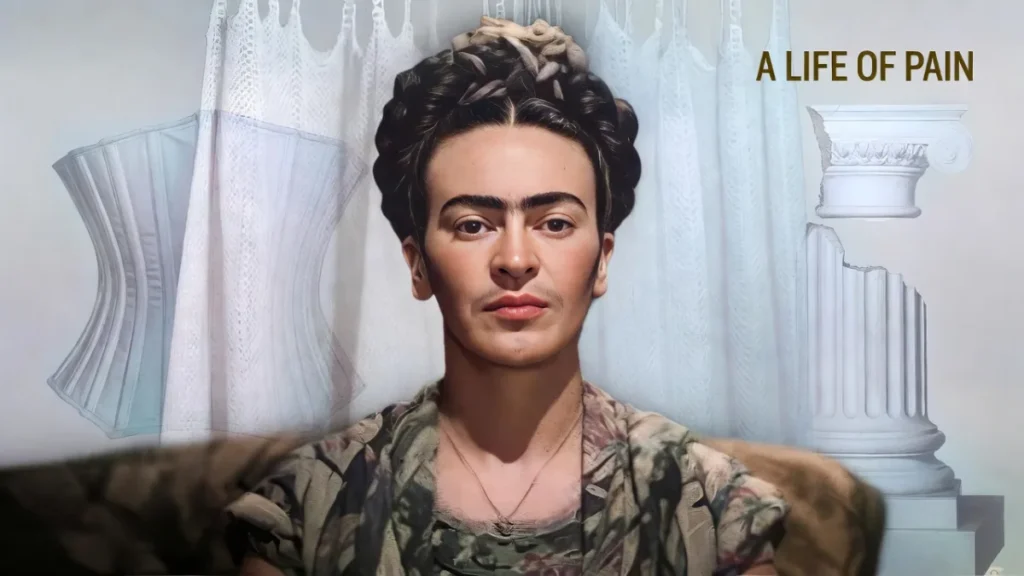
She never fully recovered. By the end of her life she spent much of her time in a wheelchair, yet she kept painting almost until the day she died on July 13, 1954.
How Suffering Became Her Greatest Subject
Frida once said she painted herself because she was often alone and because she was the subject she knew best. That intimate knowledge included every scar, every ache, every disappointment her body handed her.
Her self-portraits – most of her 143 known works are in this format – turn physical and emotional pain into vivid symbols. She doesn’t shy away from the brutal details. Instead she uses them to create something strangely beautiful and fiercely honest.
Take The Broken Column from 1944. Here she shows her body split open down the middle, revealing a cracked Ionic column in place of her shattered spine. Nails pierce her skin everywhere, and a tight orthopedic corset holds her torso together. Her face looks straight out at you – calm, tear-streaked, but unbroken. It’s one of the most direct visual statements about chronic back pain ever created.
Another heartbreaking example is Henry Ford Hospital (1932). Painted after a miscarriage, it shows Frida lying naked on a blood-stained hospital bed, surrounded by floating symbols of her lost pregnancy and fertility: a snail, a flower, a pelvis. The raw grief is impossible to miss.
My Birth (also 1932) goes even further – it depicts her own birth with her head emerging bloodied between her mother’s legs, no helping hands in sight. It’s a shocking, almost clinical image that blends her lifelong gynecological struggles with the trauma of her accident.
Then there’s The Two Fridas (1939), a large double self-portrait made during her separation from Diego. One Frida has an exposed, bleeding heart; the other holds surgical scissors. The painting captures emotional pain as vividly as her other works show physical damage.
Even gratitude finds its way in. In Self-Portrait with the Portrait of Dr. Farrill (1951) she honors one of her spine surgeons who encouraged her during repeated operations. It’s a rare moment of warmth amid the suffering.
These aren’t abstract metaphors. They’re almost medical illustrations – personal, emotional, and brutally honest.
Why Her Work Still Hits So Hard Today
Frida produced relatively few paintings, mostly small-format, yet they pack an explosive emotional punch. The surrealist André Breton famously called her art “a ribbon around a bomb.” That description still fits perfectly.
Her life was full of contradictions: a woman who wanted to heal others but spent decades fighting her own broken body; a passionate love story with Diego that brought joy and heartbreak; a fierce Mexican identity wrapped in traditional Tehuana dresses even as she lay in hospital beds.
What makes her enduring is how she refused to hide. In an era when illness and disability were often kept private, Frida made them public – and beautiful. She turned personal catastrophe into universal statements about resilience, identity, and the human body under duress.
Today she’s a global icon. Films, theater productions, massive exhibitions, and books keep introducing new generations to her story. But at the core remains that unflinching gaze: a woman who looked straight at her pain and painted it anyway.
Final Thoughts – Pain, Art, and the Courage to Show Both
Frida Kahlo didn’t choose her suffering, but she chose how to respond to it. Through her brush she documented a lifetime of medical hardship – from childhood polio to a catastrophic accident, repeated surgeries, miscarriages, and unrelenting pain – and turned it into something transcendent.
Her paintings remind us that suffering doesn’t have to be silent. Sometimes the most powerful thing you can do is look it in the face, name it, and share it. In doing so, Frida didn’t just create art; she created a legacy of honesty and strength that continues to inspire anyone who has ever felt trapped by their own body.
If you’ve ever stood in front of one of her self-portraits, you know the feeling: it’s uncomfortable, it’s beautiful, it’s deeply human. And in that discomfort lies her greatest gift.
What draws you to Frida Kahlo’s work? Is it the raw emotion, the symbolism, or the sheer defiance? I’d love to hear your thoughts in the comments.


