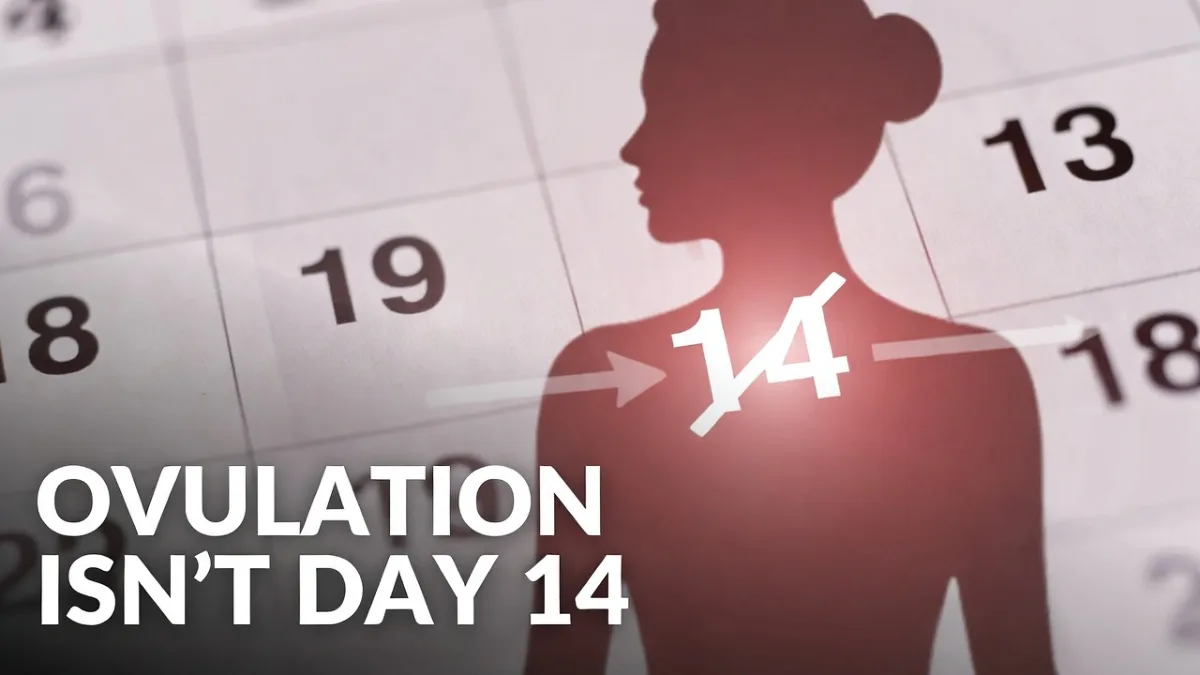
Think your period follows a perfect 28-day clock, with ovulation popping up right on day 14 like clockwork? That’s the classic textbook story we’ve all heard – but turns out, it’s more myth than reality for most women. A massive real-world study just blew that idea wide open, showing that ovulation timing varies hugely and day 14 is far from the norm.
If you’re trying to conceive, avoid pregnancy naturally, or just want to understand your body better, this could change everything. Relying on that old “day 14” rule might mean missing your fertile window entirely. In this post, we’ll break down the eye-opening research, what it really says about cycle lengths and ovulation, and practical tips for tracking yours accurately.
Also Read



Busting the Myth: The Classic 28-Day Cycle Is Rare
We’ve been taught that a “normal” menstrual cycle lasts exactly 28 days, splitting neatly into a follicular phase (building up to ovulation) and a luteal phase (after ovulation until your period). Ovulation? Supposedly smack in the middle on day 14.
But a huge analysis of over 600,000 real menstrual cycles from more than 124,000 women shattered that assumption.
Key bombshell: Only 13% of women actually have consistent 28-day cycles.
The average cycle length came in at 29.3 days, with a whopping 65% falling between 25 and 30 days. Cycles varied a lot more than expected, and ovulation didn’t stick to any fixed calendar day.
The real driver? The follicular phase (from your period starting to ovulation) is the variable one, averaging 16.9 days but ranging wildly from 10 to 30 days in most cases. The luteal phase stayed more stable at about 12.4 days (7 to 17 days).
Translation: Ovulation happens when the follicular phase ends – so it shifts depending on how long that phase lasts. Day 14? Not even close for the majority.
How Ovulation Timing Changes with Cycle Length
The study dove deeper, looking at how ovulation day shifts based on overall cycle length.
For typical cycles (25-30 days), the follicular phase averaged 15.2 days – meaning ovulation around day 16 or so.
Shorter cycles (21-24 days): Follicular phase just 12.4 days – ovulation earlier, around day 13.
Very short (15-20 days, about 18% of cycles): Even earlier at 10.4 days.
Longer cycles (31-35 days): Follicular phase stretched to 19.5 days – ovulation later.
Very long (36-50 days): Up to 26.8 days follicular – ovulation way later.
Bottom line: The longer your cycle, the later ovulation tends to happen. It’s not fixed; your body adjusts the first half, while the second half stays pretty consistent.
Other Factors That Influence Your Cycle
Age plays a role too. From ages 25 to 45, cycles shortened by about 0.18 days per year – that’s over 3 days shorter across two decades. The follicular phase drove most of that change, getting shorter by 0.19 days yearly.
Body weight matters as well. Women with higher BMI (over 35) had more cycle variation – about 14% more day-to-day swings. Underweight women (BMI 15-18.5) tended to have slightly longer cycles.
These insights come from women in Sweden, the US, and UK using a fertility tracking app, so it’s real-life data, not lab-perfect conditions.
Why This Matters: Implications for Fertility and Contraception
If you’re trying to get pregnant, assuming day 14 could mean timing sex wrong and missing your best shot.
The fertile window – about 5 days before ovulation plus the day of – shifts with it. Apps or methods relying only on average cycle dates might predict completely off.
Natural contraception? Same issue. Experts in the study warned that calendar-based apps could “completely miss the fertile window” if they assume fixed ovulation.
Co-author Joyce Harper put it plainly: “To identify the fertile period, it is important to measure other factors such as basal temperature.”
Another expert added that cycle data alone isn’t enough for accurate predictions.
Here’s a quick rundown of better ways to track:
- Basal body temperature (BBT): Rises slightly after ovulation – confirms it happened
- Cervical mucus: Gets clear and stretchy (like egg whites) near ovulation
- Ovulation predictor kits (OPKs): Detect LH surge before ovulation
- Apps with multi-signals: Combine temperature, mucus, or tests for smarter predictions
- Wearables: Some track temp automatically for easier insights
Food for thought: Even in “regular” cycles, variation happens. Don’t stress minor shifts unless they’re extreme.
Limitations and Why More Research Helps
The study used app data from women interested in natural family planning, so it might not represent everyone perfectly (e.g., fewer obese participants than average population).
But it’s one of the largest real-world datasets out there, and experts see huge potential in validated app data for future insights.
Recent studies echo this – luteal phases aren’t always 14 days fixed, and fertile windows vary widely.
Take Control of Your Cycle Knowledge
This research flips the script on outdated cycle myths. Ovulation rarely hits day 14 because cycles aren’t cookie-cutter 28 days, and the first phase flexes a lot.
Understanding your personal patterns empowers better decisions – whether planning a family, avoiding pregnancy, or just feeling in tune with your body.
Start tracking multiple signs if calendar methods feel off. Your cycle is unique, and that’s totally normal.
What’s your cycle like? Do you track beyond dates, or has the day 14 myth tripped you up? Share in the comments – let’s learn from each other.


